

G2 Beijing: 17 CEOs, One Conspicuous Absence, and a Hot CPI Print
The G2 meeting in Beijing is now the most closely watched geopolitical event in global finance, more consequential than G7 or G20, because it does not happen annually and its outcomes arrive as signed contracts, not joint declarations. Trump landed with 17 CEOs: Elon Musk (Tesla and SpaceX), Tim Cook (Apple), Larry Fink (BlackRock), Kelly Ortberg (Boeing), David Solomon (Goldman Sachs), Sanjay Mehrotra (Micron), Cristiano Amon (Qualcomm), and ten others spanning finance, aerospace, and agriculture. The White House stated explicitly that this trip is not about AI. It is about buying soybeans. The most important name not on the list is Jensen Huang of NVIDIA.
Daniel Yue notes that investors with a market diary already knew this was coming. At the start of 2026, NVDA’s business outlook had already excluded China. That thesis remains intact and the Beijing delegation confirms it. NVDA grows independently. Its absence from the room is not a setback: it is the architecture of the position.
Arriving simultaneously: US April CPI at 3.8% year-over-year, the highest since May 2023, and Core CPI rising from 2.6% to 2.75%, the highest since September 2025. The two headlines landed on the same day and together they define the market conditions for the rest of 2026.
Boeing Is the Biggest Winner at the Table
Among all 17 companies in the delegation, Boeing stands to benefit most immediately. China is expected to order at least 500 Boeing 737s, with a possible additional 100 787 Dreamliners. Daniel Yue is precise: the orders were confirmed before the trip. CEO Kelly Ortberg is in Beijing to sign, not to negotiate. This is a contract ceremony, not a summit in the traditional sense.
Micron CEO Sanjay Mehrotra and Qualcomm CEO Cristiano Amon are also in the room. For Micron, the presence matters given that China remains a central demand source for high-bandwidth memory and Chinese tech companies have been offering direct funding to AI semiconductor suppliers to secure supply chains. For Qualcomm, the angle is chips for Chinese smartphone manufacturers, a market it has competed in despite the broader tech restriction environment.
The 12 large transport planes accompanying Air Force One carried not trade negotiators but the US Iran war zone control center, relocated temporarily to Beijing to maintain round-the-clock military alert during the summit. The US-Israel joint attack on Iran entered its 73rd day the same week.
CPI 3.8%: The Fed Is Frozen and the Rate Cut Trade Is Over
US April CPI rose 0.6% month-over-month and 3.8% year-over-year, the highest headline reading since May 2023. This is not demand-side inflation that monetary policy can address cleanly. It is conflict-driven: energy and food costs rising from the Hormuz disruption and the Iran war, combined with rent adjustments pushing up core service prices. The Federal Reserve cannot cut rates to fix a war. It can only wait.
Market implications are direct: interest rate cuts in 2026 are off the table. There is renewed discussion of hikes. Any equity rally from here must be earned through earnings growth and the SpaceX IPO catalyst, not multiple expansion from rate relief. The portfolio math changes for all high-duration positions held on the assumption of Fed easing.
The WTO Irony, Taiwan Arms, and Two Risks Beneath the Surface
China entered the WTO in 2001 and promised to open its internet market. In 2026, Facebook, Google, YouTube, WhatsApp, and Amazon remain blocked inside China while all Chinese platforms operate freely in the US. Every American president from Clinton through Trump 2.0 has failed to extract compliance. Daniel Yue names it plainly: the WTO and UN have proven blind, deaf, and dumb on this for 25 years.
Taiwan arms sales are on the agenda at this summit. Since 1979, the US has completed 140 arms sales to Taiwan. A Reagan-era law mandates these sales be independent of any other trade war terms. Trump has a documented record of ignoring legislation that inconveniences him. If arms sales to Taiwan are curtailed as part of a deal with Beijing, LMT, NOC, and TRX face a revenue headwind layered on top of the stealth missile inventory depletion already exposed by the Iran conflict.
What Investors Should Do Now
- Boeing is the direct play — 500+ 737 orders and possible 100 787s are confirmed before arrival; Kelly Ortberg is signing, not negotiating; BA stock has already moved but the order volume is substantial enough to support further upside
- NVDA grows without Beijing — Jensen Huang’s absence confirms the White House has cleanly separated AI from the China commercial agenda; NVDA at $221 with a 250-SMA at $177 remains structurally sound independent of this summit
- Micron and Qualcomm are in the room for a reason — watch for supply and licensing signals from both; Micron CEO’s presence alongside the HBM funding narrative suggests a memory supply agreement is on the table
- Remove any rate cut assumptions from your portfolio — CPI 3.8% with Core CPI rising means the Federal Reserve stays on hold or hikes; reprice positions built on easing expectations
- Monitor Taiwan arms language closely — any concession on the Reagan-era Taiwan arms law is a direct negative for LMT and NOC; the rare earth and tech sanction trades are the positive counterpart if China delivers gradual relief
Key Takeaway: The G2 summit is a Boeing contract-signing ceremony dressed as diplomacy, but the 3.8% CPI print arriving the same day confirms that markets must earn their record highs through earnings and the SpaceX IPO, not through rate cuts that are no longer coming.
Related reading: Tariff War Analysis · NVDA and AI Semiconductors · Interest Rate Guide · Space Economy
Read previous US Stock Express editions here.
About the Author
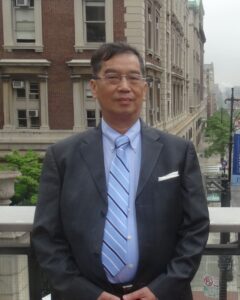
Daniel Yue has been an active investor since 1980, with experience spanning stocks, currencies, futures, metals, and bonds. A scholar of the Chicago School of Economics, he holds a Certificate with Distinction from Cambridge University and a degree in International Trading from National Taiwan University. He served as Chief Analyst for over 30 years and Chief Mentor at Sincere Finance. In 2017, he received an award from the University of Arizona for financial internship leadership.
The analysis and opinions expressed in this article are for educational purposes only and do not constitute financial advice. Investing involves risk. Please consult a qualified financial advisor before making investment decisions.
About the Author
Daniel Yue has been an active investor since 1980, with experience spanning stocks, currencies, futures, metals, and bonds. A scholar of the Chicago School of Economics, he holds a Certificate with Distinction from Cambridge University and a degree in International Trading from National Taiwan University. He served as Chief Analyst for over 30 years and Chief Mentor at Sincere Finance. In 2017, he received an award from the University of Arizona for financial internship leadership.
The analysis and opinions expressed in this article are for educational purposes only and do not constitute financial advice. Investing involves risk. Please consult a qualified financial advisor before making investment decisions.